For feature details, visit Whova

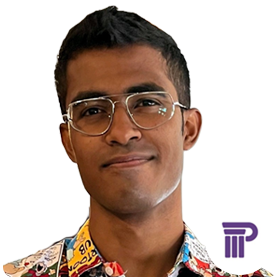
ABOUT THE SPEAKER:
Akash Shetty is the co-founder and CTO of Publicus, a Canadian GovTech company building AI-native infrastructure for government procurement.
At Publicus, Akash leads the development of production systems that transform fragmented contracts, tenders, invoices, amendments, task authorizations, webpages, and PDFs into structured, traceable intelligence for businesses and public-sector organizations. His work spans multimodal document processing, retrieval and ranking, agent orchestration, evaluation, data lineage, human review, and the deployment of trustworthy AI workflows in environments involving public money and institutional accountability.
Publicus has completed federal work supporting Buy Canada decision-making and is working on procurement modernization through Innovative Solutions Canada and Public Services and Procurement Canada. Akash approaches AI as a builder shaped by physics and first-principles thinking, with a focus on moving beyond impressive prototypes toward systems that can be verified, operated, and trusted in the real world.
TALK TITLE:
TRACK:
SUB TOPIC:
ABSTRACT:
Publicus processes procurement data spread across RFPs, contracts, amendments, award notices, invoices, task authorizations, webpages, and other records. Our early AI workflows optimized for producing a useful answer: retrieve relevant context, reason over it, generate structured output, and evaluate the result. That worked until we tried to increase automation in workflows where an answer can be semantically correct while its evidence is incomplete, stale, contradictory, or simply the wrong source.
We redesigned the system around an evidence ledger rather than the generated answer. Extracted facts and agent claims became typed artifacts carrying source document, location, provenance, transformation history, confidence, and conflicts. Retrieval became evidence acquisition rather than context stuffing. Verification became a separate stage that reconciles claims across records. Unsupported or conflicting outputs cross an explicit human-review boundary instead of being silently converted into fluent prose.
The redesign also changed how we evaluate the system. Instead of relying primarily on answer quality or a single LLM-as-judge score, we measure the pipeline at several boundaries: field-extraction F1, claim-to-source agreement, evidence-grounding accuracy, conflict detection precision/recall, unsupported-output rate, lineage coverage, bilingual performance, latency, cost per document, and human-review burden.
I’ll walk through the production architecture, the failure modes that forced the redesign, where deterministic code replaced model judgment, how we preserve evidence through multi-step agent execution, and how we decide whether a new model or workflow is actually safe to promote.
Attendees will leave with a practical pattern for building agents where correctness means more than producing the right-looking answer: designing typed evidence artifacts, separating retrieval from verification, constructing evals around failure boundaries, and defining human escalation rules for high-stakes AI systems.
WHAT YOU’LL LEARN:
Business Leaders: C-Level Executives, Project Managers, and Product Owners will get to explore best practices, methodologies, principles, and practices for achieving ROI.
Engineers, Researchers, Data Practitioners: Will get a better understanding of the challenges, solutions, and ideas being offered via breakouts & workshops on Natural Language Processing, Neural Nets, Reinforcement Learning, Generative Adversarial Networks (GANs), Evolution Strategies, AutoML, and more.
Job Seekers: Will have the opportunity to network virtually and meet over 30+ Top Al Companies.
Ignite what is an Ignite Talk?
Ignite is an innovative and fast-paced style used to deliver a concise presentation.
During an Ignite Talk, presenters discuss their research using 20 image-centric slides which automatically advance every 15 seconds.
The result is a fun and engaging five-minute presentation.
You can see all our speakers and full agenda here