The bottleneck isn’t skill anymore. It’s imagination and execution speed.
For years, building a working AI-powered product meant months of work, a full team, and a lot of luck. That’s genuinely changed. One person with the right tools likes Cursor, Claude Code, Bolt, Lovable, v0 – can go from idea to working product in days. The constraint used to be access.
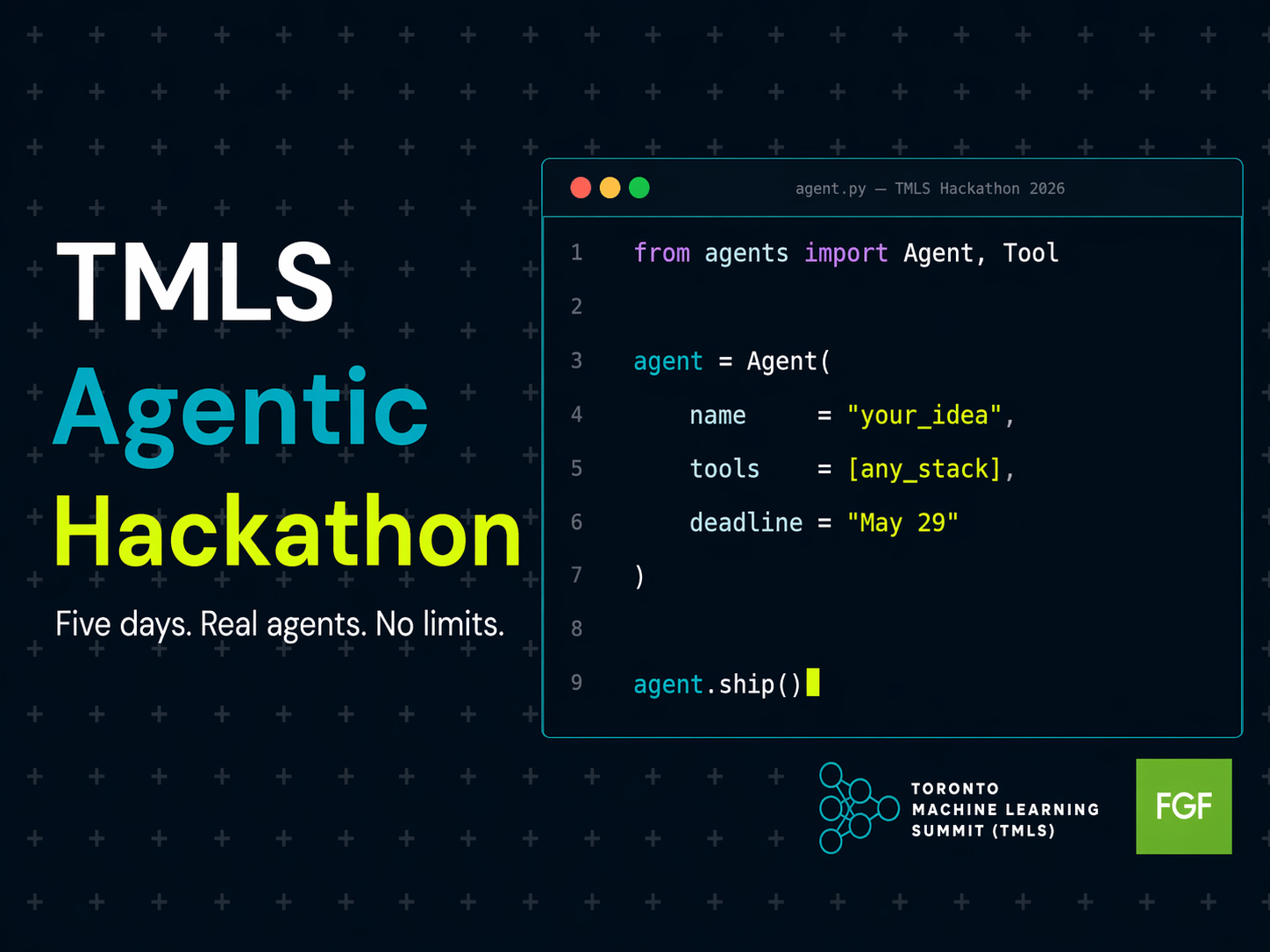
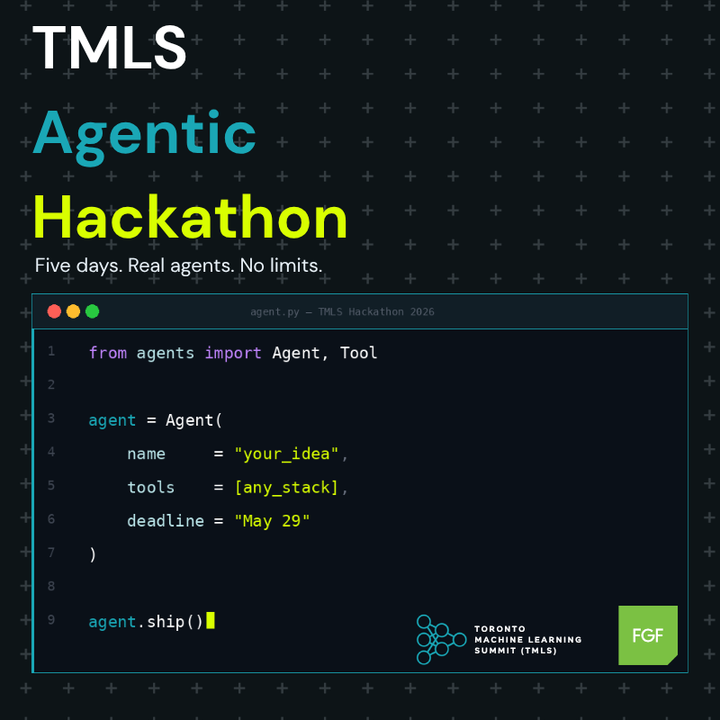
Running during Toronto Tech Week, May 25–29, the hackathon gives Canadian AI practitioners five focused days to build something real with the agentic tools they’ve been tracking.
It opens with an in-person kickoff at CSI Spadina on Monday and closes with a science-fair demo night at Wisedocs on Friday.
What the Week Looks Like
The format is deliberately open. No prescribed problem. No required stack. You decide what to build and which tools to use. What’s structured is the rhythm, and that structure is what makes shipping possible.
Monday, you arrive at CSI Spadina for the kickoff. You pitch your idea in sixty seconds, find your team, lock your project direction, and start building the same day. Lunch is provided. By the time you leave Monday afternoon, you have a team, a project, and a Slack channel.
Tuesday through Thursday, you work on your own schedule. There’s no mandatory check-in location, teams build from wherever they work best. Mentors are available mid-week for office hours if you hit a real blocker. The only hard requirement is a two-sentence async update on Wednesday.
Thursday at 2 PM, submissions close. Every team submits a working prototype or deployed app, a repository link, and a demo plan. The work completed during the week is what gets judged, not what existed before Monday.
Friday, you arrive at Wisedocs for the expo. Each team gets a table. Judges from the TMLS community and FGF Brands will rotate from table to table, spending five to seven minutes with each project.
You show what you built, explain the decisions you made, and answer questions. Winners are announced at the awards ceremony at 2:30 PM.
What Judges Score On
Judges score on five criteria: impact and usefulness, technical execution, demo quality, novelty and creativity, and shipping mindset. Each is scored on a one-to-five scale.
Impact means the problem is real and the solution is plausible for an actual user.
Technical execution means you built it, not just mocked it up. Demo quality means you can show it working clearly and confidently.
Novelty means there’s a fresh angle or a clever approach, not just a standard implementation.
Shipping mindset means the project feels like something that could go further, thoughtful tradeoffs, realistic production thinking, a clear sense of next steps.
Polish is not on the list. A clean demo of something that works beats an ambitious demo of something that doesn’t, every time.
What You Can Build With
Any tools, any stack. Cursor, Claude Code, Bolt, Lovable, v0, Replit, GitHub Copilot, use what gets you to ship fastest.
The only requirement is that you’re clear about what was built during the hackathon week versus what existed before.
Judges score the work completed in those five days.
Prior work is allowed, but teams must disclose it at submission.
The focus is on what you actually ship in the time you have.
Who This Is For
The hackathon is built for practitioners who want to build, developers and ML engineers who’ve been watching agentic tools evolve and want a structured week to actually use them, product people who have an idea they’ve been sitting on, and first-timers who’ve been watching from the sidelines and are ready to participate.
You don’t need to arrive with a team.
The Monday kickoff includes a structured team formation block. Solo registrants are matched based on skills and interests.
If you show up with curiosity and a problem you care about, the format handles the rest.
Teams are capped at five people. Total capacity is around thirty teams.
Why TMLS Built This
The TMLS community has always been grounded in what actually happens when AI systems are built and lived with, not polished stories, but real experience under real constraints.
The hackathon is an extension of that.
It’s a chance for practitioners in the Canadian AI community to build something together, in public, and show their work to peers who understand what it takes.
The winning team gets tickets to TMLS 2026 (June 17–18, CIBC Square), which means the hackathon connects directly back to the broader community gathering in June.
Register
The hackathon runs May 25–29, 2026, during Toronto Tech Week. Kickoff is at CSI Spadina, 192 Spadina Ave, Toronto. Demo night is at Wisedocs, 30 Duncan St.
Registration is open at luma.com/n1oa0f9d
You can register as a team of up to five or as an individual to be matched at kickoff.