Over the last year, we’ve watched the conversation around “AI adoption” change.
Not because models stopped improving. They’re improving quickly.
The shift is happening somewhere else: in the messy interface between probabilistic systems and real organizations, security review, compliance sign-off, production economics, and day-to-day operability.
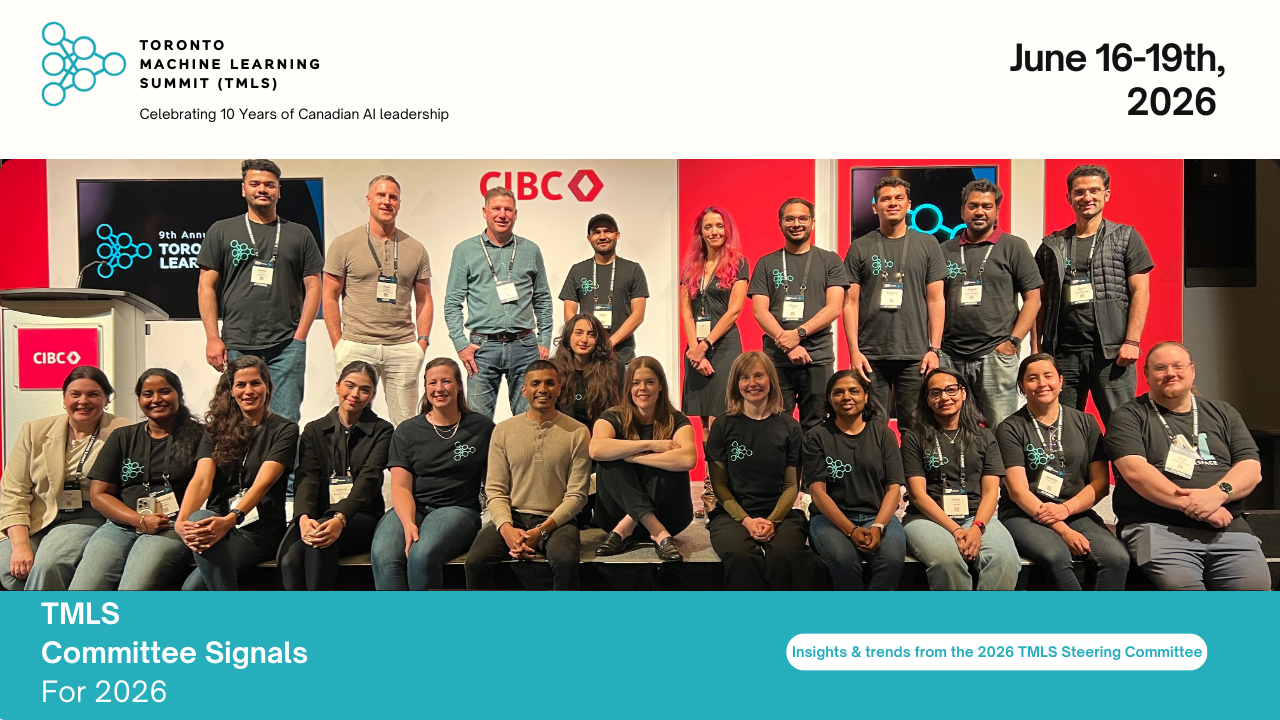
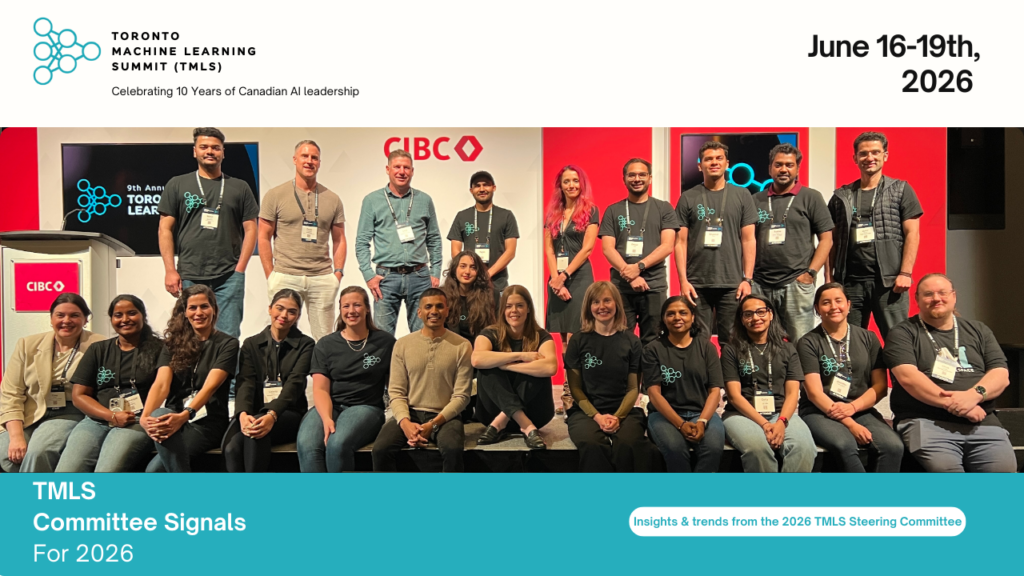
This post summarizes what surfaced in the 2026 TMLS Steering Committee survey and qualitative feedback. It’s a grounding in what peers operating real systems say is actually slowing them down.
Why we trust this signal
A key detail in the committee input: more than 85% of respondents are either actively operating AI systems in production or running advanced pilots.
So the patterns are coming from people who have already felt the friction of deploying, owning, and explaining these systems in environments where failures have consequences.
What changed: “Make the model smarter” → “Make the system sign-off-able”
The committee input points to a clear inflection point:
Model capability is no longer the limiting factor. Organizational readiness is.
When teams hit a wall, it’s rarely because the model can’t produce an answer. It’s because the system can’t be approved, trusted, scaled economically, or owned safely over time.
Across the responses, three categories showed up repeatedly as hard stops.
Hard stop #1: Security, privacy, and regulatory sign-off
The committee repeatedly surfaced a blunt truth from operators:
When the risk is ambiguous, there’s a significant challenge to get sign-off.
Common blockers included:
- Liability ambiguity for probabilistic behavior (“What happens when it’s wrong?”)
- PII exposure and privacy risk in real workflows
- Data leakage concerns
- Prompt injection and related adversarial behaviors in systems that accept user input
What’s important here: the dominant constraint wasn’t tooling. It was the absence of shared internal frameworks for assessing and governing probabilistic systems in regulated environments.
In other words, even if a team can build it, the organization often can’t legitimately approve it yet.
Hard stop #2: Infrastructure, scalability, and cost
We heard a consistent production reality: a system can be “capable” and still be unusable.
Operators called out:
- Inference cost that collapses at scale
- GPU availability constraints
- Latency that doesn’t fit real workflows
Teams seeing 2–5 second responses in scenarios where sub-200ms is required for the workflow to function will not work.
This isn’t a “performance optimization” problem. It’s a product viability problem.
In production, the questions stop being “can we do it?” and become:
- Can we do it within the budget?
- Can we do it fast enough to be used?
- Can we do it reliably enough to be trusted?
Hard stop #3: Team skills, ownership, and organizational structure
This one showed up as the meta-blocker: when ownership is unclear, every other problem becomes harder to resolve.
The committee repeatedly identified:
- Skill gaps that prevent teams from diagnosing failures quickly
- Silos between Product, Engineering, Data, Security, and Legal
- Unclear accountability when AI systems fail (or when they produce harmful outputs)
A recurring tension in the feedback: leadership expectations diverge from engineering reality. Teams are asked to “ship AI,” but the ownership model often hasn’t been defined for:
- Who owns evaluation quality?
- Who owns the incident response when behavior changes?
- Who owns the boundary between “model issue” and “system issue”?
- Who owns policy enforcement in the product?
When that ownership is fuzzy, sign-off slows down, and production becomes a sequence of workarounds.
The daily friction (for teams already in production)
Beyond the launch blockers, teams already operating systems described recurring operational drag in three areas.
1) Evaluation and measurement
Operators emphasized the same gap:
There’s often no shared definition of “good” for non-deterministic systems.
That shows up as:
- Misaligned expectations between stakeholders
- Metrics that don’t reflect the real failure modes
- Evaluation processes that can’t keep up with iteration speed
2) Data quality and lineage
A pattern that shows up in almost every production system:
Production data ≠ demo data.
Teams reported issues with:
- Drifting data distributions
- Restricted access to the “real” data that matters
- Weak lineage that makes root-cause analysis slow and political
3) Reliability and failure modes
In demos, a weird edge case is a shrug.
In production, those same failure modes can become:
- User trust collapse
- Compliance incidents
- Operational load that erodes the team
The operators were clear: you don’t just need “better answers.” You need systems that degrade safely and fail in ways humans can understand and recover from.
What this means for 2026: the work is shifting
Taken together, the committee input suggests a broader shift:
We’re moving from making AI intelligent to making AI:
- governable
- trustworthy
- operable over time
That’s not as flashy as new model releases but it’s meaningful progress, and it indicated there will be a shift towards more agents used in production, throughout 2026.
How to use this information
If you’re leading or supporting production ML/AI or agentic systems, consider using this as a quick internal alignment artifact:
- Ask: “Which of these hard stops is our bottleneck right now?”
- Ask: “Who would sign off on risk today, and what would they need?”
- Ask: “Do we have an agreed definition of ‘good’ for this system?”
- Ask: “If this fails in production, who owns the response?”
You don’t need all the answers to benefit. You just need shared clarity on what’s actually blocking progress.
What we want to hear from you
Our 2026 year will be focused on highlighting shared lessons to address these bottlenecks, with the goal of disseminating successful and repeatable patterns for teams operating at scale.
If you’re interested in learning more about our committee selection process or call for speakers, we welcome you to come take part !